CS2 Stickers: Slots, Scraping and What They Add to the Price
A sticker is applied for good, it cannot be peeled off, and it adds far less than its own value to the weapon. We cover the five slots, the scrape mechanic, the tiers from paper to gold, and above all why the market credits only a small share of a sticker's face value.
What a sticker does to an item
A sticker is a separate tradable item that can be applied to a weapon. Since the February 2024 update every gun has five slots instead of the previous four; knives and gloves take no stickers at all.
One property matters above the rest, and it needs to be understood before the first purchase: applying is irreversible. You cannot peel a sticker off and put it back in your inventory. The only tool available is the scraper, which wears the artwork down, and the final scrape removes the sticker from the weapon and destroys it.
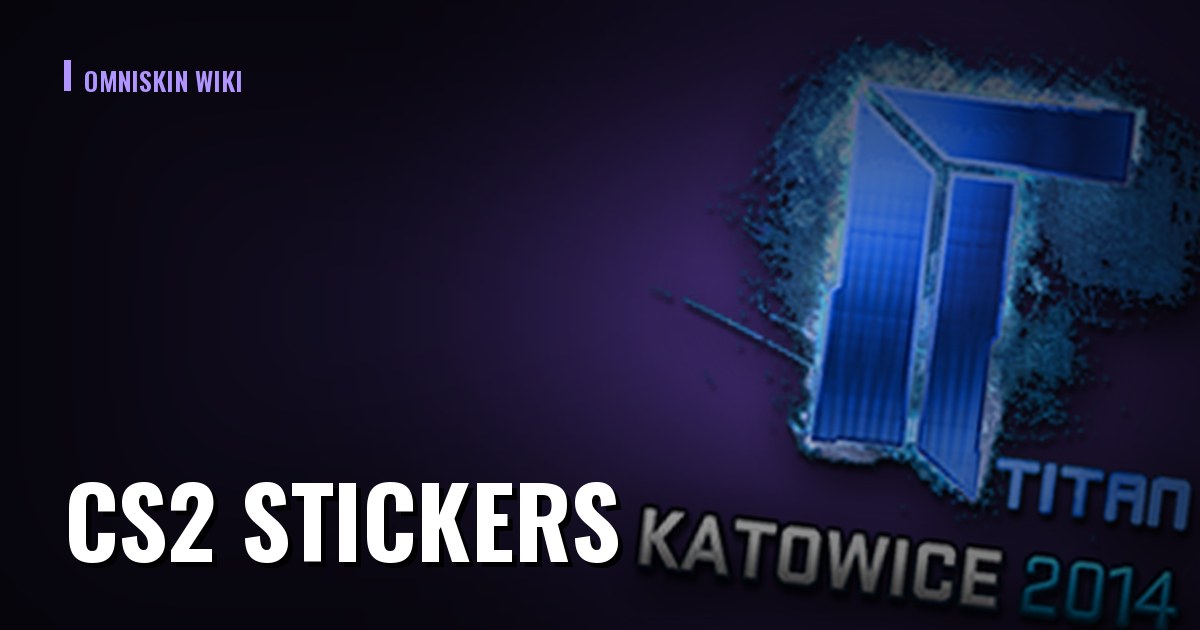
 Sticker | Titan (Holo) | Katowice 2014
 Sticker | iBUYPOWER (Holo) | Katowice 2014
 Sticker | Natus Vincere (Holo) | Katowice 2014
 Sticker | Crown (Foil)
 Sticker | Howling Dawn
 Sticker | Have Fun
 Sticker | 3DMAX (Gold) | Austin 2025
 Sticker | 3DMAX (Holo) | Austin 2025
Applying writes off the sticker's value rather than transferring it to the weapon. The moment you press "apply" is best treated as buying an appearance at the sticker's full price, because there are no conditions under which that money comes back.
Tiers: from paper to gold
Stickers ship in several finishes, and the difference between them is not the artwork but the rarity and how the surface behaves in light.
| Tier | How it looks | What it does to the price |
|---|---|---|
| Regular (paper) | flat print | the base, usually pennies |
| Glitter | fine shimmer | a small premium |
| Holo | rainbow shift | a visible premium, the most wanted mass tier |
| Foil | mirror foil | above holo, smaller print runs |
| Gold | gold fill | top of the line, rarely seen |
Within one tournament the same team exists in every tier at once — and that is the first trap when comparing prices. Two rows with nearly identical names can differ by hundreds of times because the word in brackets is different.
The second trap is the year and the tournament. Stickers from old majors were printed in short runs and have not been replenished for years, which is why the famous holos from Katowice 2014 sell for tens of thousands of dollars while a visually similar sticker from a recent event costs a few dollars. The artwork has nothing to do with it: the difference is entirely print run plus how many copies have already been applied and destroyed.
 Sticker | Vox Eminor | Katowice 2014
 Sticker | Reason Gaming (Holo) | Katowice 2014
 Sticker | Team LDLC.com (Holo) | Katowice 2014
 Sticker | Kawaii T (Holo)
 Sticker | Kawaii CT (Holo)
The scraper: how sticker wear works
A sticker can be worn down step by step. Wear runs from untouched to fully scraped, each use of the scraper increases the wear, and the last one removes the sticker for good. Modern CS2 lets you set how far to scrape rather than clicking blind.
Why anyone does this. A scraped sticker looks different: the gloss disappears, the weapon's texture shows through, and on certain builds partially scraped stickers are valued above pristine ones — that is a matter of a particular buyer's taste, not a market rule.
From the market's side the scraper is a destruction mechanism. Every fully scraped sticker leaves circulation forever. That is why supply on old stickers is not merely fixed but slowly shrinking: part of the print run is literally being rubbed away by players.
Sticker placement on the model deserves its own note. The slots sit differently on different guns, and the same sticker reads differently depending on where it lands: in one spot it is fully visible on inspect, in another it disappears under a hand or gets cut off by the edge of the model. On expensive builds that is part of the price, because the buyer is paying for a look rather than for a set of items. On cheap ones it is not worth thinking about — the premium is lost in the noise there.
How much stickers add to a weapon's price
This is the central question and the main place where newcomers lose money. Intuition says: put a hundred dollars of stickers on an AK and the AK is worth a hundred dollars more. The market counts differently.
What actually happens: only a small share of the stickers' value is added to the item — roughly 10 to 20 percent, about 15 on average. The rest is written off the moment they are applied.
There are several reasons, and all of them are sound:
- the buyer wants a specific build, and tastes rarely match — most would prefer a clean weapon and their own stickers;
- the new owner cannot peel the stickers off and sell them separately, so they are buying somebody else's decision rather than an asset;
- the price of a build is capped from above by the price of the same clean item plus a modest premium — the market simply does not pay more.
From which follows a rule worth memorising word for word: the upside on reselling a sticker build is usually 2 to 5 percent, which is noise. A deal starts being interesting at around 10 percent of upside, and on cheap items such numbers barely occur.
Establish the price of a clean item of the same name and wear — that is your reference point. Add up the market value of the stickers separately, as though they were still sitting in an inventory. Multiply that sum by roughly 0.15 — that gives the honest expected premium rather than the face value. Compare the result with the listing. If the seller is asking face value on top, you are overpaying for somebody else's taste. Remember the exit: in our measurements an instant buyout returns a median of 81% of the listing price, and on builds that gap is usually wider than on clean items.
Check a specific copy from its inspect link:
🔧Check float & patternfree, no sign-upIf you are buying a weapon to play with, somebody else's stickers are almost always an overpayment. If you are buying to resell, a clean item is more liquid than a build at the same price: clean suits everyone, a build suits only whoever happens to like it.