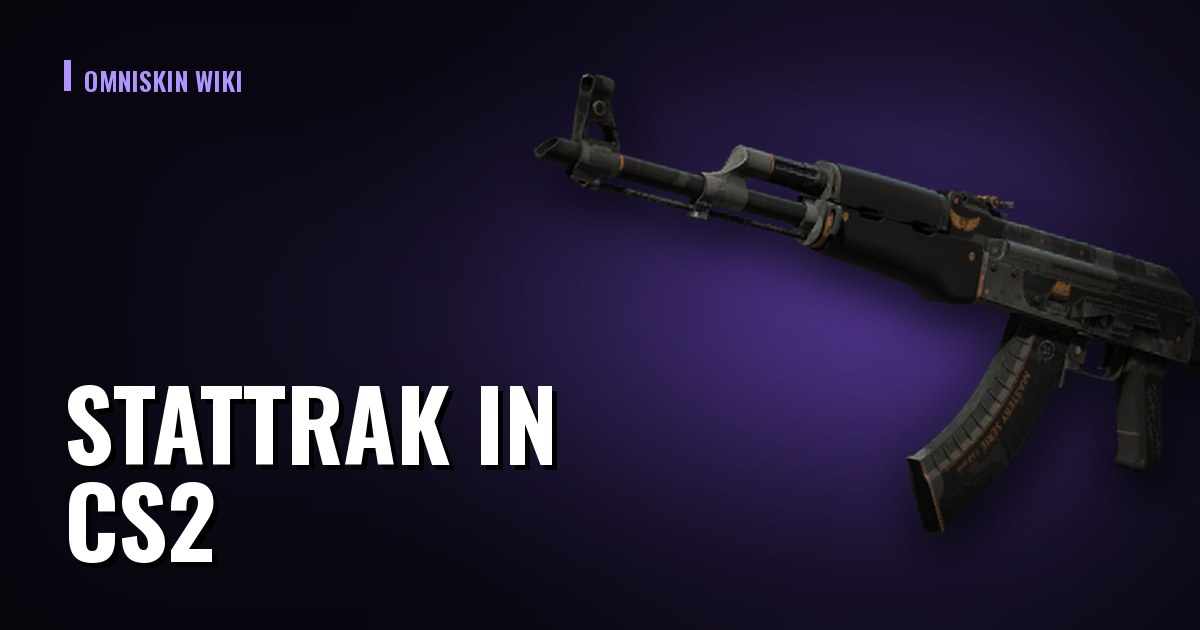
StatTrak in CS2: What the Kill Counter Actually Costs
Measured on our own price base: the median StatTrak premium is 138%, ranging from 3% to 194%. How the counter works, why the premium swings so wildly, and when it is not worth paying.
StatTrak is a kill counter on a weapon, and it always costs extra. The question is how much: the same premium differs by orders of magnitude between skins. We measured it across our own price base and got a median of 138% — a counter version typically costs a bit more than twice the plain one. But the extremes in the sample run from 3% to 194%, and understanding that spread is more useful than remembering an average.


What StatTrak is and where it comes from
StatTrak is a technology that adds a confirmed-kill counter to an item (on knives it counts kills as well; for gloves StatTrak does not exist at all). The counter is visible on the weapon model in game and only increases while the item sits in your inventory and you play official matches.
The key rules, from which the entire economy follows:
| Rule | What it means in practice |
|---|---|
| StatTrak versions drop from cases | You cannot turn a plain skin into one |
| Not every skin has a StatTrak version | Operation collection skins often have none |
| Souvenir and StatTrak are incompatible | A souvenir item will never carry a counter |
| The counter does not reset on sale | The new owner continues from the same number |
| The StatTrak Swap Tool exists | It swaps counters between two of your own ST items |
That last point matters for price: the number on the counter is not final. It can be moved, which means the market prices the presence of the technology rather than the specific figure.
What the counter costs: the numbers
We took items that have both versions of the same wear in our base and compared their best prices. Comparing on identical wear is essential: matching a StatTrak Factory New against a plain Battle-Scarred tells you nothing about the counter and everything about the scuffs.
| Metric | Value |
|---|---|
| Items measured | 19 |
| Median StatTrak premium | 138% |
| Lowest premium in the sample | 3% |
| Highest premium in the sample | 194% |
Examples from the sample: AK-47 | Rat Rod (Field-Tested) carried a 194% premium, and AK-47 | Elite Build showed 158% across four different wear levels at once.
The measurement was taken on 28 August 2026 from our item pages. The sample is small (19 items) and consists mostly of inexpensive rifles, so treat the median as a reference point rather than a coefficient you can apply to any skin.
Why the spread is so wide
Cheap skins produce the highest percentage premiums. If the plain version costs $2 and StatTrak costs $6, that is +200%, even though the difference is three dollars. On expensive skins the percentage is almost always lower: far fewer buyers will add hundreds of dollars for a counter.
StatTrak versions drop less often. The chance of pulling StatTrak from a case is roughly one in ten, so supply is a fraction of the plain version's. Where the plain skin has hundreds of listings, the counter version may sit in single copies — and the price rests on what one particular buyer is willing to pay.
Demand for the counter is uneven across weapon types. People buy a counter to use it: AK-47, AWP and knives attract willing buyers, while pistols and rarely used weapons attract far fewer. That is where the 3% end of the sample comes from.
A low percentage premium does not mean a good buy. Often it means nobody wants this particular StatTrak — and selling it will take exactly as long as selling any other illiquid item. Before buying, look not only at the price difference but at the number of real trades on the item.
Liquidity: the counter's real catch
Our broader market measurement showed that of 60 items checked, 39 had low liquidity, with a median of 42 sales in 30 days. For StatTrak versions the picture is harsher: fewer are produced, fewer are bought, and they move more slowly than plain ones.
The practical conclusion: StatTrak is easier to buy than to sell. If you are buying it to play with, liquidity is a secondary concern. If you are buying it as an investment, a 138% premium means you paid double and will get your money back not when you want to, but when a buyer turns up.
- Compare StatTrak and plain prices strictly on the same wear.
- Read the premium in money, not only in percent: +200% on a two-dollar skin is three dollars.
- Check the number of real trades — for StatTrak it is almost always lower.
- If you want the counter for play, pick a wear you do not mind: the number transfers, the wear does not.
- If you plan to resell, budget weeks rather than days.
When the counter is not worth paying for
Three situations where the premium almost certainly will not come back.
First, an expensive skin bought "to hold". The percentage premium is lower there, but the absolute money is large and the buyer pool is narrow.
Second, a weapon you do not play. A counter on a pistol sitting in your inventory neither grows nor gains value.
Third, an item whose plain version is already illiquid. A StatTrak version of an illiquid skin is illiquidity squared.
Every skin page in our wiki calculates the StatTrak premium automatically and always on matching wear — the comparison that is slow to do by hand and easy to get wrong. The same page shows the number of real trades, so you can judge how quickly the item actually moves.
How to work it out yourself
If you want to check a specific item without our page, here is the order. Find the best price of the plain version in the wear you want across all marketplaces, not just Steam — the Steam price includes the 15% fee and therefore sits above the market. Find the best StatTrak price for the same wear. Divide the second by the first and subtract one: that is your premium.
Then compare it against the reference. Well below 100% suggests weak demand for this particular StatTrak; well above 200% means either supply is almost absent or a random expensive listing skewed the sample, and the price history is worth a look.
The kill counter is a premium for enjoyment rather than for rarity as such. The 138% median shows the order of the markup, but the decision belongs to the specific item: compare prices on matching wear, look at the trade count, and answer honestly whether you are buying a thing to play with or an asset to resell.