The Rust Item Store and Rotation: Price Is Decided Before You Buy
Rust has no wear and no patterns, so one thing sets the price — whether the skin is in the store right now. We cover how the weekly rotation works, what happens to a price the moment an item leaves the store, and how to check a skin's status before you trade.
Why supply decides everything in Rust
The Rust market is simpler than the CS2 one in exactly one place, and that place governs everything else. Here there is no wear, no pattern and no StatTrak: two copies of the same skin are completely identical. Remove those three multipliers and you remove the three reasons a price could differ inside a single name.
One question remains: how many copies exist, and is that number still growing. And that is settled in the in-game store, not on a marketplace.
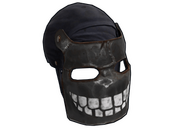 Big Grin
 Tempered Mp5
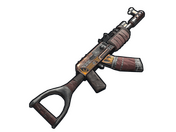 Glory AK47
 Neon Dragon Garage Door
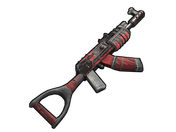 Alien Red
 Glowing Skull
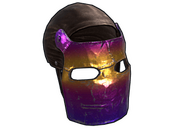 Tempered Mask
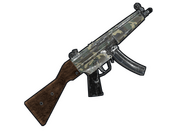 Military Camo MP5
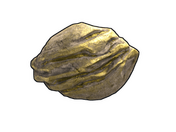 Gold Rock
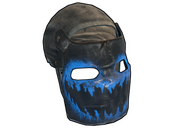 Frostbite
The absence of float makes cross-marketplace comparison honest: the item's name fully describes the item. A gap between venues in Rust is a real gap, not the by-product of comparing two different copies under one label.
How the rotation works
Rust skins are drawn by players and submitted to the Steam Workshop. The developer selects some of that work and puts it in the in-game store. The store is not static: the set of available items refreshes on a schedule, usually weekly, and the selected skins stay on sale for a limited time.
Then comes the mechanic this article exists for. A skin has exactly two states, and they pull the price in opposite directions.
The skin is in the store. Anybody can buy it, in any quantity. Supply grows every day the sale runs. On marketplaces the price is capped from above by the store price: there is no reason to pay a reseller more than the store asks, and any higher listing simply sits without a buyer.
The skin is out of the store. No new copies appear at all. The number in circulation is fixed and can only shrink from there — some of it settles in the inventories of people who stopped playing. There is no ceiling any more, but there is no floor either: the price holds exactly as long as somebody wants the item.
| State | Supply | What happens to the price |
|---|---|---|
| In the store now | grows daily | capped by the store price |
| Just left | fixed | often a short burst of interest |
| Left long ago | slowly shrinking | driven by demand alone |
| Handed out en masse | very large | stays low for years |
"The skin left the store" does not imply "the skin will appreciate". Leaving removes the ceiling; it does not create demand. An item nobody liked while it was on sale simply stops selling afterwards — cheap, but now with no buyer.
What this changes in practice
The mechanic produces a rule that saves a newcomer money: in Rust, when you buy matters more than what you buy.
If a skin is in the store right now, buying it on a marketplace above the store price makes no sense — you are paying extra for something sold officially. If the skin has left the store, you are buying an item with a fixed print run, and here it pays to look not at the artwork but at how many listings exist and how often trades actually clear.
The second factor is which item the skin goes on. A skin on a rifle or a door is seen by everyone, constantly; a skin on something rarely placed or rarely held is seen by its owner alone. Demand follows visibility, which is why weapon and building skins are reliably more liquid than clothing and furniture.
Find the exact item name — in Rust the name is the full identifier, with no wear and no pattern attached. Check whether the skin is in the in-game store right now. If it is, the store price is your ceiling. If the skin is out of the store, look at how many listings exist: narrow supply with live demand is a price, wide supply with dead demand is a trap. Compare the price across several marketplaces. With no float involved, a gap between venues is real and worth using. Count the exit rather than the entry: in our measurements an instant buyout returns a median of 81% of the listing price.
How the Rust market differs from CS2
The difference is not in size but in where the uncertainty lives.
In CS2 the uncertainty is inside the item: one name hides different floats, patterns and phases, and half the buyer's work is figuring out which copy is in front of them. In Rust the uncertainty is outside: you know the item exactly, but you do not know whether it will ever return to the store, or whether a similar piece next month will pull the demand away.
Hence two different skills. In CS2 the winner is whoever can read a specific copy. In Rust the winner is whoever watches the store and understands that rotation is not a shop window but a tap regulating supply.
Compare prices across marketplaces and see the gap:
A simple check before buying a Rust skin second-hand: open the in-game store. If the item is there, you are almost certainly overpaying. In Rust that single check replaces all the float and pattern work CS2 demands.